
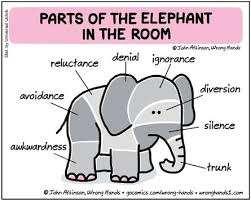
As I revisit my first op-ed, a piece that never saw the light of day, I am reminded of the issue’s urgency. It was born out of frustration, a feeling of being unheard in my arguments with the school board about the elephant in the room. The lack of support for students, particularly the failure to acknowledge the challenges faced by those with ADHD, is a pressing issue. The education system’s approach of ignoring these students’ needs is not a solution, but a delay in addressing a problem that demands immediate attention.
Please share your feedback or just share…Parts of this ended up in my MRP (Major Research Paper) for my Master’s. One day, I will figure out how to publish my MRP, but so far, I have only presented it at a conference.
“They just cannot focus!” is the first thing people say when defining ADHD. This oversimplification is frustrating. ADHD is much more and cannot be reduced to just four words. The experience of a person with an ADHD diagnosis is complicated, impacting most aspects of their lives.
Controversial Right-wing commentator Matt Walsh tweeted, “ADHD is not a legitimate medical diagnosis but a label we have slapped on certain personalities that we have deemed unacceptable or inconvenient. Yes, ADHD exists in the sense that people like myself exist. But the “disorder” is a societal judgement.”
Granted, if we were to rank order Matt Walsh’s most controversial trolling efforts, this would not make the top 100. But it does typify a widespread and troubling dismissive attitude towards a condition that affects the lives and opportunities of millions across North America.
ADHD is defined as “a persistent pattern of inattention and/or hyperactivity-impulsivity that interferes with functioning or development and is associated with significant adverse outcomes in childhood and adolescence: educational problems resulting in low rates of high-school graduation and completion of postsecondary.”
As the gatekeeper of diplomas, a significant and often life-changing piece of paper, the education system is a mighty institution, possibly one of the most powerful in the world. Many students don’t give this much thought, but for students with ADHD, this can be terrifying.
Students with an ADHD diagnosis experience the education system differently. They often have “fewer friends, are more frequently rejected by their peers, have poor peer interactions, fewer reciprocated peer friendships, and are frequently left out of activities at school compared to their non-ADHD peers”.
Approximately 5-9% of children are affected by ADHD. In a class of 30 students, a small class by today’s standards, an estimated three students have ADHD. At least three children per class learn differently without considering other mental health issues. Research indicates, “Anxiety disorders occur in approximately 30% of patients with ADHD”.
There is a cavernous impairment vs. support gap for students with ADHD diagnosis. The fate of the student with ADHD lies within the policies of the MOE that exclude them from one of their categories of exceptionality, deeming their diagnosis as unworthy of recognition and resulting in limited to no academic support.
Families have been fighting for recognition and support for their ADHD-diagnosed children for years. As one of those families and with my own childhood ADHD diagnosis, we are witnessing our youngest child have his fire extinguished by the same system that almost snuffed out mine. It terrifies me to think that other children like mine suffer in silence, losing their desire to learn.
“How do you address his learning disability without addressing how he learns?” A perfectly logical question, one would think. After an uncomfortably long silence, the school official responded, “The people you need to speak to are above my pay grade.” My experience is not unique.
In 2018, the Human Rights Commission stated, “The definition of disability in the Code, and as interpreted in human rights case law, is broader than the Ministry of Education exceptionality categories. Yet, the Ministry of Education continues to exclude ADHD despite the Human Rights Commission warning that they “found that the Ministry of Education’s failure to name ADHD specifically could potentially leave them liable for discrimination where its definition of exceptionalities prevented or delayed a student from receiving required accommodations.”
Each school board in Ontario has a Special Education Advisory Committee to “make recommendations to their board or authority on anything that impacts the establishment, development and delivery of special education programs and services.”
In 2023, like others before me at other school boards, I was a delegate at the Special Education Advisory Committee meeting advocating for ADHD to be recognized by the Ontario Ministry of Education as qualifying within the communication category of exceptionality. I am one of many SEAC delegates who have successfully had a letter to the ministry with this request. However, I, like all the others, received thanks but no thanks and replied with a memo from 2011 attached.
If you build a house without a foundation, it will crumble. Likewise, kids who remain unsupported in school are destined to falter. ADHD and giftedness are learning differences with many overlapping traits. The most significant difference between giftedness and ADHD is that gifted children qualify within one of the Ministry’s five categories of exceptionality. How lucky are they?
Like gifted children, children with ADHD are creative, intuitive, empathetic, and resilient. They jump in with both feet, are hyper-focused, and multitask without missing a beat. The Ministry of Education needs to implement its “Human Rights, Equity, and Inclusive Education Plan.,” which was developed to address the non-inclusive environments, lack of accommodation, and systemic barriers for students within the education system.
 Random Acts of ADHD: ADHD is not what you do but who you are
Leave a comment